
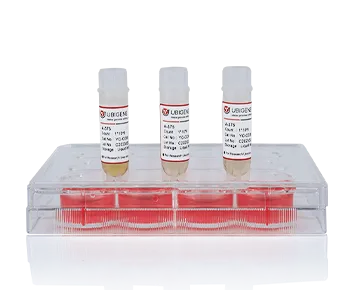
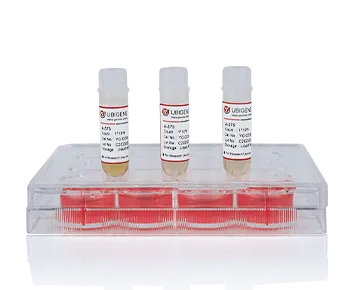
NOG Stable Expression Cell Line (CHO-K1)

 · 万象全品类细胞库


 咨询我们
 培养基详情
The secreted polypeptide, encoded by this gene, binds and inactivates members of the transforming growth factor-beta (TGF-beta) superfamily signaling proteins, such as bone morphogenetic protein-4 (BMP4). By diffusing through extracellular matrices more efficiently than members of the TGF-beta superfamily, this protein may have a principal role in creating morphogenic gradients. The protein appears to have pleiotropic effect, both early in development as well as in later stages. It was originally isolated from Xenopus based on its ability to restore normal dorsal-ventral body axis in embryos that had been artificially ventralized by UV treatment. The results of the mouse knockout of the ortholog suggest that it is involved in numerous developmental processes, such as neural tube fusion and joint formation. Recently, several dominant human NOG mutations in unrelated families with proximal symphalangism (SYM1) and multiple synostoses syndrome (SYNS1) were identified; both SYM1 and SYNS1 have multiple joint fusion as their principal feature, and map to the same region (17q22) as this gene. All of these mutations altered evolutionarily conserved amino acid residues. The amino acid sequence of this human gene is highly homologous to that of Xenopus, rat and mouse.
EZ-iScreen™产品优势

该类细胞株稳定表达Cas9蛋白,仅需转染gRNA,即可实现基因敲除,而同时转染gRNA和供体DNA,则可实现基因敲入/点突变。

在该类细胞的基础上已成功构建大量基因敲除细胞株,且基因敲除效率均提高5-10倍。

该类细胞株经过优化,代次低、活性高、状态好,适用于各类基因编辑实验。
相关热门推荐




联系我们
只需填写下面的表格留下您的咨询信息,
我们将在 24小时 内回复
* 姓名
* 电话
* 单位
邮箱
* 咨询内容
了解途径